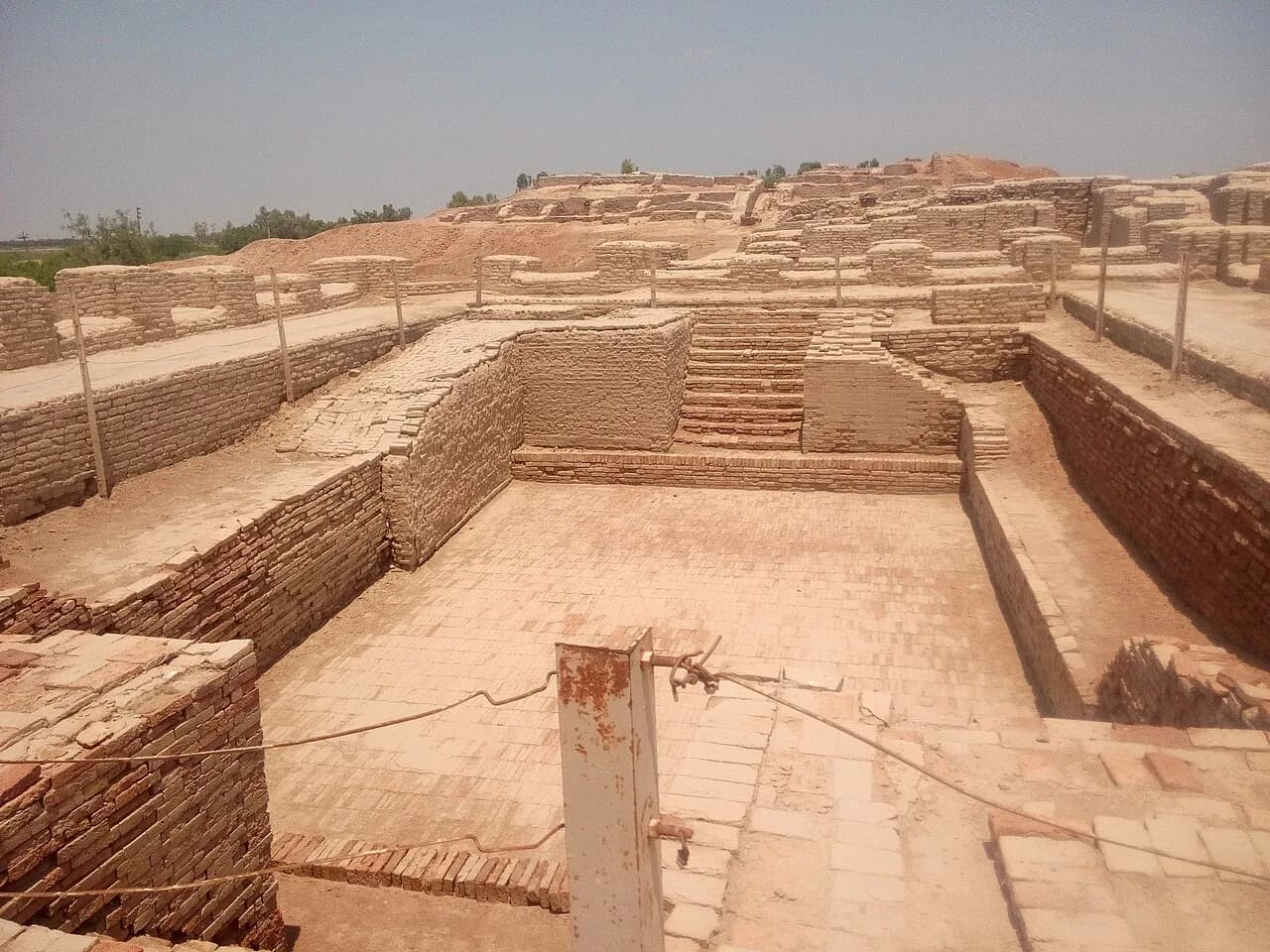
A brick-lined basin with stairs feels familiar enough to name. "Bath" describes its architecture; "priestly ritual" would describe an event we have not seen. The Great Bath at Mohenjo-daro invites us to separate those two claims.
A carefully built basin
UNESCO's Mohenjo-daro record places the Great Bath within an Indus city of streets, wells, drains and extensive brick architecture. The basin's waterproofing, controlled approaches and adjacent rooms show that people organized access to water with care. They do not identify every user or ceremony. The raised sector is also only part of the city; a view centered on the basin can make the wider settlement disappear.
Early excavation exposed large areas of brick and supplied the plans on which much discussion rests. The building's purpose must be tested against its drains, entries and stratigraphy, not a modern analogy to a temple pool. Were activities public, restricted, repeated or seasonal? Different answers may fit the plan until associated finds narrow them.
The brick we see today
Exposed ancient brick requires continuing care in a monsoon climate. A Sindh conservation report to UNESCO records severe 2022 rainfall damage and later protection of the site, including work at the Great Bath. Protective capping and resets can change the clean lines a current photograph presents. The material history since excavation is another layer of evidence.
What would let us identify an actual ceremony rather than a plausible one? A securely associated deposit, a readable text or a repeated pattern of use might move us closer. Until then, the bath's engineering is impressive enough to deserve its own account. Its human function is the open question.