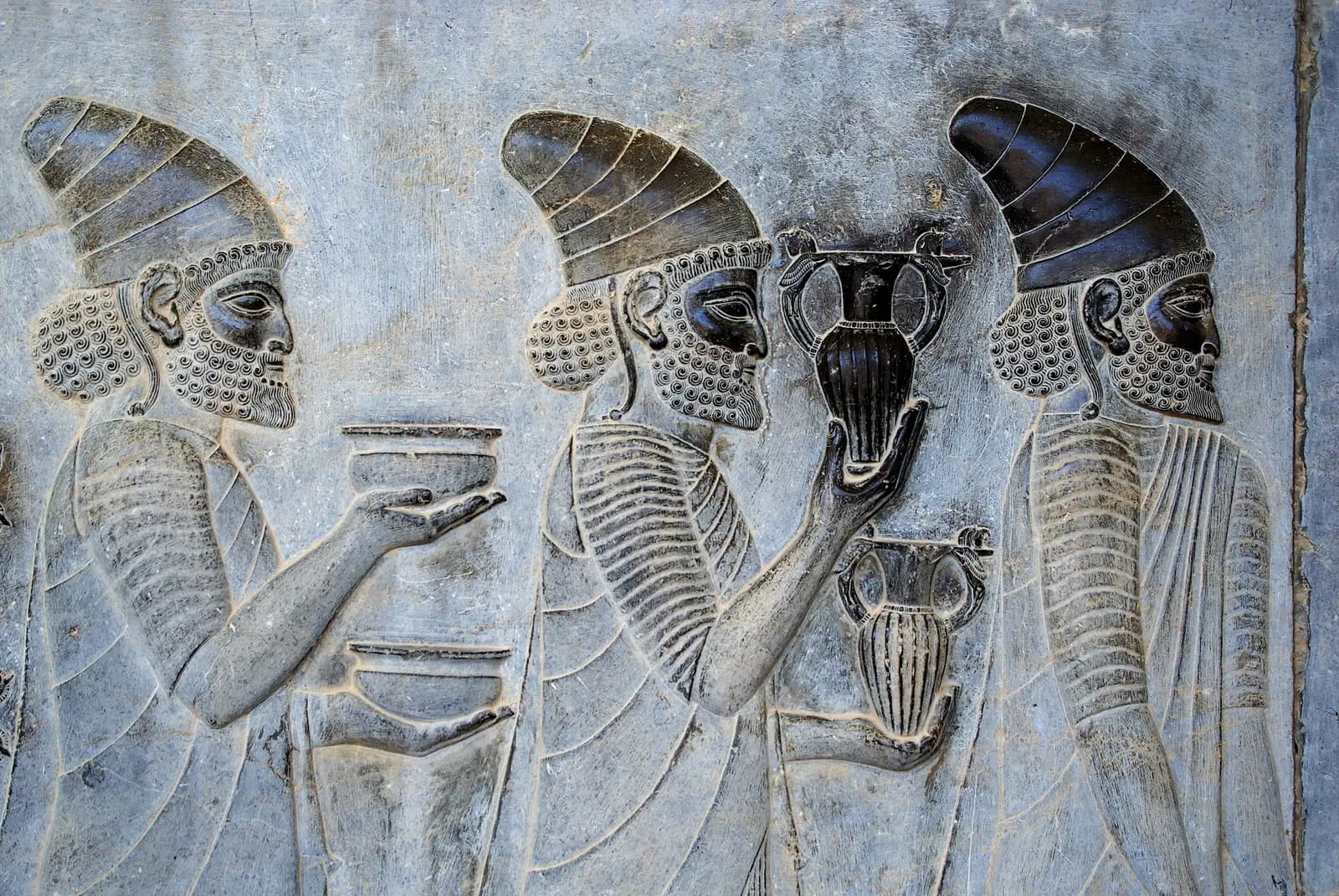
On the Apadana stairway, lines of people carry vessels, animals and textiles toward the royal hall. It is tempting to read the relief as a photograph of an imperial ceremony. Stone does preserve details of dress and gifts. It also preserves a message the Achaemenid court chose to display. How do we tell the two apart?
A procession made for a palace
UNESCO's Persepolis record places the great terrace's beginning under Darius I around 518 BCE, with later work by Xerxes and Artaxerxes. The Apadana was an audience hall reached by monumental staircases. Columns and bases help establish its scale; the wooden roofing is gone. The carved approach made visitors pass a carefully organized image of peoples gathered under royal power.
Those figures are strong evidence for Achaemenid art and courtly self-presentation. They cannot, alone, tell us the name of every person shown, whether each group attended one event, or precisely what obligations connected it to the king. Calling every object "tribute" turns an interpretation into a caption. I would compare the reliefs with the inscriptions and the excavation record.
What the excavation photographs add
The palace was damaged in antiquity, including the burning associated with Alexander's conquest in 330 BCE. Twentieth-century excavators documented exposed blocks and building plans. A present photograph shows surviving carved stone in a managed archaeological site; an early field photograph can show where a block lay and which surface was later stabilized. Neither reconstructs the full ancient audience.
I would start with one carved delegation. Which panel is it on? What did the excavators find in position? What royal inscriptions, if any, help identify the scene? The question becomes richer as the sources get more precise. Perhaps the most revealing mystery is how the empire wanted to be seen, and how much of that image we can test.